Provisional Certificate Attestation — Can You Attest It Before Your Final Degree?
Yes, provisional certificates can be attested before your final degree arrives — here’s the process and what universities accept.
Navigating the authentication and verification process for overseas documentation requires precision, institutional adherence, and an in-depth understanding of international diplomatic standards. Whether you are relocating for higher education, pursuing an employment opportunity abroad, registering a business entity, or establishing residency with your family, ensuring that your official certificates are legally validated is mandatory. In this comprehensive guide on Provisional Certificate Attestation — Can You Attest It Before Your Final Degree?, our senior attestation specialists break down the legal frameworks, verification channels, step-by-step administrative procedures, documentary requirements, and critical guidelines necessary for seamless cross-border recognition.
Understanding the Legal Framework and International Recognition
International document validation is governed by stringent bilateral accords, embassy protocols, and multilateral treaties such as the Hague Apostille Convention of 1961. When Indian certificates—whether educational degrees, personal vital records, or commercial contracts—are presented before foreign consulates, immigration departments, or corporate registries, authorities cannot accept raw domestic documents. Foreign officers have no direct database access to assess whether a certificate issued in India is authentic, altered, or fraudulent.
Legalization bridges this institutional gap by creating an unbroken, verified evidentiary paper trail. Starting from recognized ground-level authorities (such as regional Notaries Public, Sub-Divisional Magistrates, or State Higher Education Departments), each successive government level verifies the signature and seal of the preceding authority until reaching the Ministry of External Affairs (MEA), Government of India, and subsequently the destination country's diplomatic mission. When following provisional degree, provisional certificate attestation, degree attestation without original, strict compliance prevents administrative delays, visa denials, and bureaucratic rejections.
Step-by-Step Verification and Attestation Procedure
The complete authentication workflow follows a rigorous sequential chain. Skipping intermediate stages or submitting documents through unauthorized agents often results in permanent blacklisting or severe visa processing halts. Here is the verified verification path:
Sequential Attestation Stages
Every certificate must progress through these statutory checkpoints in exact chronological order.
Primary Authentication & Notarization
The foundational step involves examination of the original document alongside the applicant's valid passport. A registered Notary Public executes initial notary verification, validating that the document is genuine and legally admissible for state-level review.
State Department or SDM Legalization
For educational certificates, State HRD (Higher Education Department) or Higher Education Council conducts university record cross-checks. For personal records (such as birth, marriage, or PCC certificates), State Home Department or the Sub-Divisional Magistrate (SDM, New Delhi) issues state-level authentication.
Ministry of External Affairs (MEA) Government of India
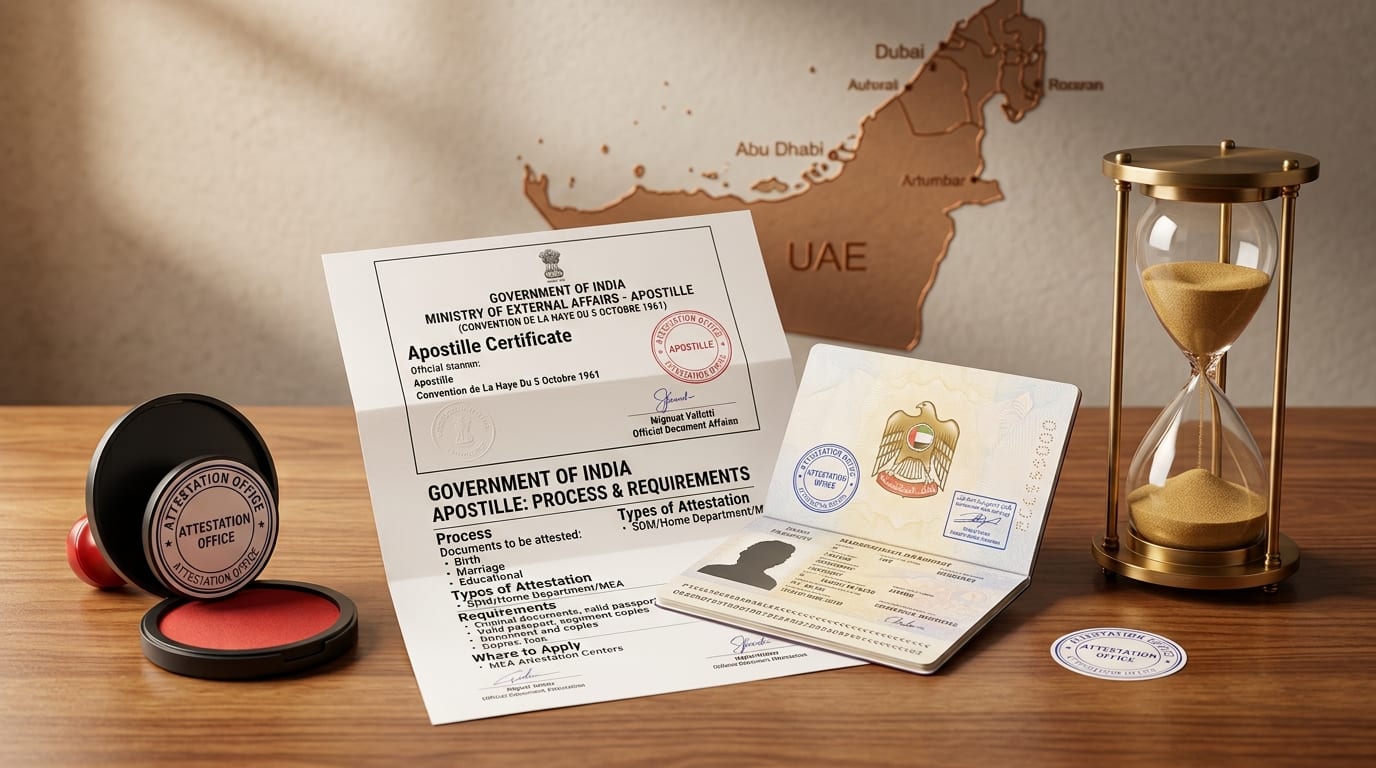
Once state-level clearance is affixed, the document is submitted to the MEA in New Delhi or authorized regional branch secretariats. The MEA applies the official Central Government Apostille sticker or MEA Attestation seal, certifying India's federal verification.
Destination Embassy Legalization / MOFA
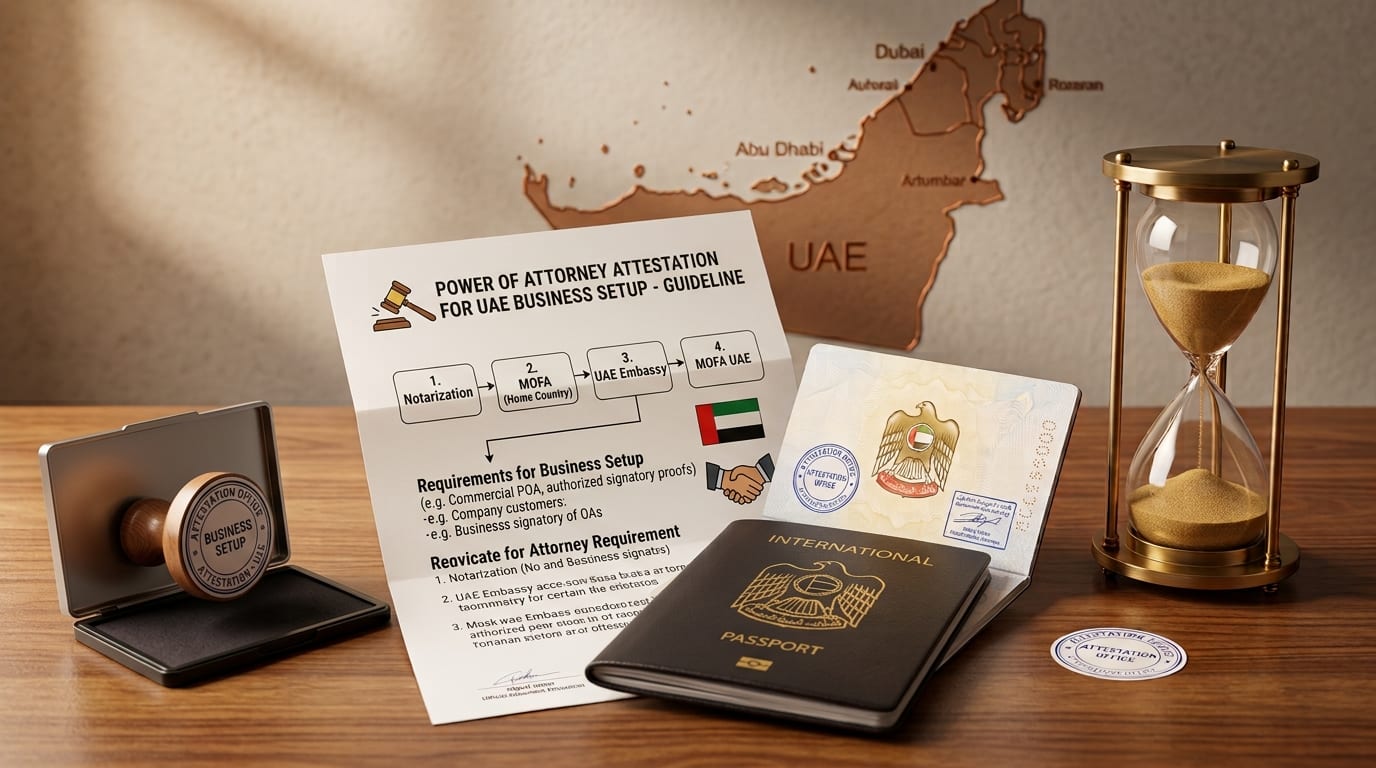
For non-Hague member nations (including UAE, Qatar, Kuwait, Saudi Arabia, and Oman), the document must be submitted to the destination country's Embassy or Consulate in New Delhi. Upon arrival in the destination country, local Ministry of Foreign Affairs (MOFA) attestation provides final domestic validity.
Mandatory Document Checklist for Processing
To prevent consular queries or rejection during administrative scrutiny, applicants must assemble an exact documentary package. Incomplete dossiers are returned unprocessed by ministry reception desks. Ensure the following items are ready:
- Original Document: Clean, undamaged original certificate bearing clear issuing signatures, official institution letterheads, and original embossed seals. Laminated certificates must have lamination professionally removed prior to submission.
- Passport Bio-Pages: Clear, legible color photocopies of the applicant's current passport (first identification page and last address page) with at least six months remaining validity.
- All-Semester Marksheets / Transcripts: For academic verifications, consolidated mark sheets or individual semester grade cards are mandatory for institutional background checks.
- Supporting Affidavits (If Applicable): In cases involving name mismatches, surname additions after marriage, or date of birth variations between the passport and certificate, a registered Sub-Divisional Magistrate notary affidavit is required.
- Official Translation (For Non-English Records): Certificates issued in regional vernacular languages must include a certified, sworn legal translation into English or Arabic, attested simultaneously.
Expected Processing Timelines and Expedited Options
Turnaround time varies depending on the document classification, state of issuance, and the specific diplomatic mission involved. Standard state HRD verification through university registrars typically requires 15 to 25 working days, as universities must manually verify archived examination ledgers. Conversely, the Sub-Divisional Magistrate (SDM) route offers a faster alternative for eligible personal and non-educational documents, completing MEA clearance within 4 to 7 working days.
Embassy attestation timelines range between 3 to 10 working days depending on consular workload, appointment quotas, and seasonal visa cycles. For urgent relocations, family emergencies, or fast-track employment starts, Pro Attestation coordinates direct expedited submission through authorized ministry channels, ensuring minimum turnaround without administrative delays.
Crucial Precautions and Common Mistakes to Avoid
Every year, thousands of applicants experience severe delays due to preventable filing errors. Here are the key traps our legal attestation desk cautions applicants against:
- Submitting Laminated Documents: Embassies and the MEA cannot stamp over plastic lamination films. Physical de-lamination must be performed carefully without tearing the ink layer.
- Spelling Discrepancies: Minor differences between passport names and certificate names (e.g., initials vs. expanded names) must be bridged with formal legal affidavits before ministry presentation.
- Unaccredited Third Parties: The MEA does not accept direct public counter walk-ins for apostille; only MEA-outsourced and authorized partners are legally permitted to deposit documents. Dealing with unverified agents risks counterfeit stamps.
- Overlooking In-Country MOFA: Receiving embassy attestation in Delhi is the second-to-last step for Gulf nations. Sponsoring companies and immigration departments in Dubai, Doha, or Riyadh require the final local MOFA stamp upon landing.
Frequently Asked Questions
Q: Is an Apostille the same as an Embassy Attestation?
Q: Can I get attestation on color photocopies instead of the original certificate?
Q: Do I need to be physically present in Delhi or my home state for attestation?
Q: How long is the MEA apostille or embassy attestation valid?
Q: How can I track the live progress of my document attestation?
For personalized consultation regarding your document requirements, processing corridors, and express dispatch options, explore our detailed services on Embassy Attestation and MEA Apostille Services, or contact our 24/7 client helpdesk for immediate assistance.
Send Us an Inquiry
We guarantee zero third-party delays and instant verification help.